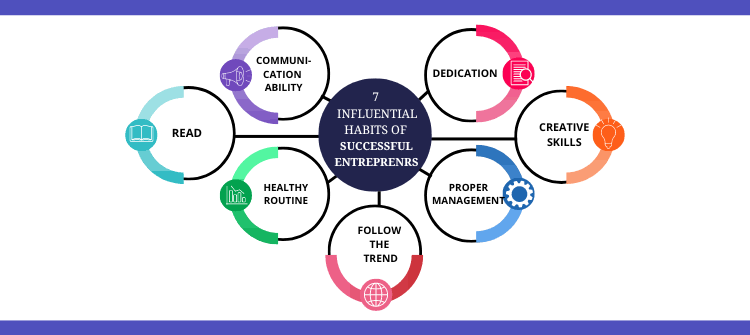
There’s a lot of noise online about waking up at 4 AM and cold showers being the secret sauce of success. Honestly? Most of that is nonsense. After spending years around founders — some who made it, some who didn’t — I’ve noticed the real habits of successful entrepreneurs are far less dramatic and far more boring than Instagram makes them look.
Let’s talk about what actually separates the ones who last from the ones who burn out in year two.
They Protect Their Mornings, Not for Motivation, But for Focus
This isn’t about waking up early necessarily. It’s about having one uninterrupted block of time before the chaos of messages and meetings begins.
Quick answer: One of the most consistent habits of successful entrepreneurs is blocking 60-90 minutes of distraction-free time daily for the single most important task, before checking email or messages.
They Say No More Than They Say Yes
New founders say yes to everything — every partnership, every feature request, every “opportunity.” Successful ones get ruthless about saying no early.
A founder I know turned down a large client in her second year because the project would’ve pulled her team away from building the core product. Painful short-term decision. Right long-term one.
They Track Numbers Weekly, Not Just Monthly
- Revenue and cash position
- Customer acquisition cost
- Churn or repeat purchase rate
- Team capacity vs workload
Waiting for month-end reports to notice a problem is often too late. Weekly check-ins catch issues while they’re still small.
They Read Outside Their Industry
This one surprised me. The sharpest entrepreneurs I’ve met read history, psychology, even fiction — not just business books. Cross-domain thinking is where a lot of good ideas actually come from.
They Build Relationships Before They Need Them
Networking isn’t asking for favors when you’re desperate. Quick answer: Successful entrepreneurs build genuine relationships with mentors, peers, and potential partners well before they need help, so the ask feels natural rather than transactional when the time comes.
They Treat Failure as Data, Not Identity
This is hard, honestly. But the founders who last don’t spiral after a bad quarter. They ask “what did this tell us” instead of “what does this say about me.”
They Delegate Earlier Than Feels Comfortable
Most first-time founders hold onto tasks too long because “it’s faster if I just do it myself.” That’s true short-term and false long-term. Successful entrepreneurs train someone else even when it slows things down initially.
They Protect Sleep and Physical Health, Unglamorously
No biohacking required. Just consistent sleep, some movement, and not treating exhaustion as a badge of honor. Burnout doesn’t build companies — it ends them.
FAQ
Do successful entrepreneurs really wake up at 5 AM? Some do, many don’t. What matters more is protected, distraction-free focus time, whenever that happens to be in your schedule.
How important is networking for entrepreneurial success? Very, but it works best when built consistently over time rather than only when you need something.
Is failure necessary to become a successful entrepreneur? Not strictly necessary, but nearly universal. What matters is how quickly you extract lessons and move forward.
Should entrepreneurs read business books only? No — diverse reading often sparks better problem-solving and creative thinking than industry-specific material alone.
Can these habits be built gradually, or all at once? Gradually, always. Trying to overhaul everything at once usually backfires within a few weeks.
Conclusion
None of these habits of successful entrepreneurs are flashy, and that’s exactly the point. Small, consistent behaviors — protected focus time, weekly number checks, real relationships — compound over years into what looks like overnight success from the outside. Pick just one habit from this list and commit to it for the next 30 days.