Water plays a bigger role in business than most people realize. It flows through kitchens, production areas, restrooms, cooling equipment, and countless other parts of a working day. When the water supply is reliable, people rarely give it a second thought. But when it leaves mineral deposits on fixtures, affects the taste of drinks, or causes problems with equipment, the issue becomes difficult to ignore. Good water management isn’t just about appearance or convenience. It can help businesses protect their investments, maintain consistent operations, and create a better experience for employees and customers.
The right solution depends on how water is used, what’s present in the supply, and what a business needs to achieve. A small café, a hotel, a manufacturing facility, and a busy office may all need different approaches. Understanding those differences is the first step toward making a sensible decision.
Why Water Quality Matters in Commercial Spaces
Water quality can influence more than drinking water alone. In restaurants, it may affect beverage preparation, dishwashing, and the performance of coffee machines. In hotels, mineral buildup can leave marks on bathroom fixtures and increase cleaning demands. Manufacturing businesses may have specific water requirements to maintain product consistency or protect sensitive equipment.
These problems don’t always appear overnight. Sometimes, the first sign is a kettle that develops scale too quickly or a water dispenser that needs frequent servicing. Other times, a business notices higher maintenance costs without immediately connecting them to water quality.
That is why it helps to look beyond the visible symptoms. A water assessment can identify concerns such as hardness, sediment, unpleasant tastes, or certain dissolved substances. The appropriate testing method depends on the suspected issue, and some concerns require laboratory analysis rather than a simple onsite check.
Choosing a Filtration System That Fits Your Business
Not every business needs the same level of filtration. Installing a complicated system without understanding the actual water problem can waste money, while choosing a system that’s too small may leave important needs unmet.
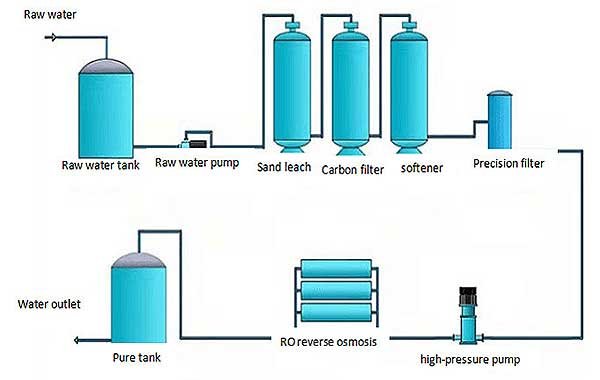
Well-planned commercial water filtration can address specific concerns, depending on the technology selected. Sediment filters, for example, can capture particles such as sand and rust. Activated carbon filters are commonly used to improve taste and odor by reducing certain substances, including chlorine where the filter is designed for that purpose. Other filtration technologies target different contaminants.
The key is to match the equipment to the water analysis and the intended use. A restaurant preparing drinking water may have different requirements from a facility using water in industrial processes. Flow rate matters, too. A system that performs well in a small office might struggle during the morning rush at a large hotel.
Before purchasing equipment, consider daily water demand, available installation space, filter replacement costs, and the manufacturer’s maintenance recommendations. These details may not sound exciting, but they often determine whether a system remains practical over time.
The Role of Water Softeners in Daily Operations
Hard water is a common challenge for businesses that rely on heated water or use equipment throughout the day. It contains elevated levels of calcium and magnesium, which can leave mineral deposits on surfaces and inside pipes, heaters, boilers, and appliances.
Over time, scale can reduce heat-transfer efficiency, interfere with equipment performance, and increase the need for cleaning or servicing. The extent of the problem depends on water hardness, temperature, usage patterns, and the equipment involved.
For facilities dealing with these issues, commercial water softeners may be worth considering. Traditional ion-exchange softeners reduce hardness by exchanging calcium and magnesium ions for other ions, usually sodium. This can help limit scale formation, although it doesn’t remove every type of contaminant or make water suitable for every application.
A suitable softener should be sized according to the water’s hardness and the business’s actual demand. An undersized unit may regenerate too frequently or fail to meet peak usage, while an oversized one may add unnecessary expense. Businesses should also account for salt consumption, regeneration water, drainage requirements, and ongoing service.
There is one important distinction: softening and filtration solve different problems. A business might need one, the other, or both. Testing first makes that decision much easier.
When Reverse Osmosis Makes Sense
Some applications require more extensive treatment than a conventional filter or softener can provide. Food and beverage preparation, certain laboratory processes, and specialized commercial operations may need water with carefully controlled dissolved-solids levels.
In these situations, reverse osmosis systems can be useful. The technology pushes water through a semipermeable membrane that separates much of the dissolved material from the treated water. The precise performance depends on the membrane, feed-water conditions, system design, and maintenance.
Reverse osmosis is not automatically the best option for every business. These systems can require pretreatment, regular filter and membrane replacement, and appropriate management of the reject-water stream. In some applications, treated water may also need remineralization or other adjustments to meet operational requirements.
The most sensible approach is to define the required water quality before choosing the equipment. If a business only needs to reduce sediment or improve taste, a simpler system may be sufficient. If dissolved substances are the primary concern, reverse osmosis may deserve closer consideration.
Installation and Maintenance Shouldn’t Be Afterthoughts
Even a high-quality system can disappoint when it is installed incorrectly or neglected. Proper installation includes checking pipe connections, confirming adequate flow and pressure, following sanitation requirements, and making sure the equipment can be accessed for future servicing.
Professional support can make a meaningful difference, especially in facilities where water treatment connects to several pieces of equipment. Experienced expert technicians can help assess the application, recommend appropriate equipment, and explain the maintenance schedule. They should also be able to clarify what a system is designed to remove and what remains outside its capabilities.
Once the system is running, keep a simple maintenance record. Note filter changes, service visits, unusual pressure changes, and any recurring water-quality complaints. Follow the manufacturer’s instructions rather than waiting for a problem to become obvious. Filters and membranes have different service lives, and replacement timing depends on both usage and incoming water quality.
Staff should also know whom to contact when something changes. A sudden drop in flow, unusual taste, visible leakage, or an unexpected rise in scale may indicate that the system needs attention.
Making a Practical Investment in Water Quality
Commercial water treatment is best approached as an operational decision, not simply another equipment purchase. Start by identifying the problem, testing the water appropriately, and estimating daily demand. Then compare solutions based on performance, installation requirements, maintenance needs, and long-term operating costs.
Ask suppliers for clear specifications and realistic information about ongoing expenses. Check whether replacement filters and other parts are readily available, and make sure the proposed system can handle periods of high demand. It is also sensible to discuss water use and wastewater requirements before installation.
Businesses that are unsure where to begin can schedule a free test if a provider offers that service. Before agreeing, ask what the test measures, whether it is an initial screening or a laboratory analysis, and whether any recommended treatment is based on the results. A free test can be a useful starting point, but its scope matters.
Ultimately, better water doesn’t always require the most expensive equipment or the most complicated setup. It requires a clear understanding of what the water contains, how the business uses it, and which problems genuinely need solving. With the right assessment and a realistic maintenance plan, water treatment can become a dependable part of daily operations rather than another issue waiting to disrupt the working day.