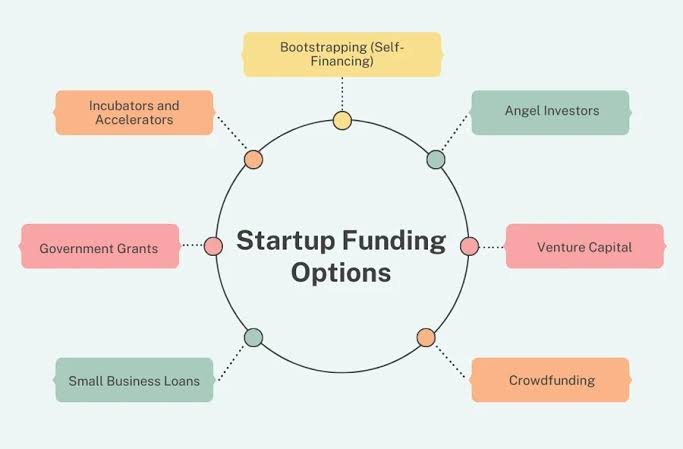
Not every founder wants to chase venture capital, and honestly, not every business needs it. I’ve noticed a lot of first-time founders assume VC money is the only path forward, when in reality most successful small businesses never raise a single round. Knowing the right startup funding options beyond investors can save you both equity and stress.
Let’s go through what actually works, especially for founders in India who aren’t targeting a unicorn valuation.
Bootstrapping With Revenue
The oldest option, and still the most underrated. Use early customer revenue to fund growth instead of outside capital.
Quick answer: Bootstrapping means funding your startup entirely through your own savings and customer revenue, giving you full ownership but requiring slower, more disciplined growth.
This isn’t glamorous. It means saying no to fancy offices and yes to reinvesting profits. But you keep 100% control, and that matters more to some founders than speed.
Government Grants and Schemes
India has several startup funding options through government channels:
- Startup India Seed Fund Scheme
- Mudra Loan Yojana (up to ₹10 lakh, collateral-free)
- Stand-Up India (for women and SC/ST entrepreneurs)
- State-level startup policies offering grants and subsidies
The paperwork is genuinely tedious, but it’s non-dilutive money — you don’t give away a single share.
Bank Loans and NBFC Credit
Traditional, but still relevant. Small business loans from banks or NBFCs work well if you have some revenue history and can show repayment capacity.
Quick answer: Bank loans suit startups that already generate steady revenue and need working capital, since lenders require proof of repayment ability rather than just an idea.
Crowdfunding
Platforms let you raise small amounts from many people, often in exchange for early product access rather than equity. Works especially well for consumer products with a strong story.
A friend building an eco-friendly packaging brand raised nearly ₹8 lakh on a crowdfunding platform simply by showing a working prototype and a clear mission. No investor pitch deck needed.
Angel Networks (Without Giving Up Control)
Some founders confuse “no investors” with “no outside money at all.” You can structure angel investment as convertible debt or revenue-based financing instead of pure equity, keeping more control while still getting capital.
Revenue-Based Financing
This is growing fast in India. Instead of equity, you repay a percentage of monthly revenue until the loan plus a fee is paid off. Good fit for businesses with predictable recurring revenue, like SaaS or subscription models.
[link to related guide about how to start a business with no money here]
Strategic Partnerships and Pre-Orders
Sometimes your funding doesn’t need to be cash at all. Partnering with a distributor who fronts inventory costs, or collecting pre-orders from customers, can fund your first production run entirely.
FAQ
Is bootstrapping realistic for every kind of startup? Not always. Capital-heavy businesses like manufacturing or deep tech usually need outside funding eventually. Service and digital businesses bootstrap more easily.
What’s the easiest government scheme for a first-time founder? The Mudra Loan is usually the simplest for small businesses since it doesn’t require heavy documentation or collateral.
Can I combine multiple funding options? Yes, and many founders do — a Mudra loan for working capital plus bootstrapped revenue is a common combo.
Is revenue-based financing better than equity funding? It depends. RBF keeps ownership intact but requires steady revenue; equity funding brings in cash without repayment pressure but dilutes ownership.
How much should I try to raise as a first-time founder? Raise only what covers your next 6-12 months of validated growth — over-raising early often leads to sloppy spending.
Conclusion
You don’t need a Shark Tank moment to fund your startup. Bootstrapping, government schemes, revenue-based financing, and smart partnerships can take you further than most people expect. Map out which of these fits your business model and apply to at least one this month.